Dashain is the biggest and most widely celebrated festival in Nepal. It is a time when families come together, elders bless younger generations, homes are cleaned and decorated, and people travel long distances to be with their loved ones. For many Nepalis, Dashain is not just a religious festival. It is also a season of family reunion, cultural traditions, food, travel, celebration, and shared memories.
The festival is deeply connected to the idea of the victory of good over evil. It is mainly associated with Goddess Durga and her victory over the demon Mahishasura. Dashain also carries different meanings across Nepal's diverse communities, with traditions varying by region, family, and cultural background.
From Ghatasthapana to Kojagrat Purnima, Dashain brings together religious rituals and everyday traditions. The most recognized moments include Fulpati, Maha Ashtami, Maha Navami, and Vijaya Dashami. Jamara, tika, blessings, dakshina, new clothes, swings, family gatherings, and festive meals all form an important part of the celebration.
What is Dashain?
Dashain is Nepal's longest and one of its most important Hindu festivals. It is celebrated over 15 days during the lunar month of Ashwin or Kartik, usually falling in September or October.
The festival is especially associated with the worship of Goddess Durga, who represents strength and the victory of righteousness over evil. According to Hindu tradition, Durga defeated Mahishasura after a long battle, making the festival a symbol of the triumph of good over destructive forces.
Dashain is also linked to the story of Lord Rama and Ravana. In another widely known tradition, Rama worshipped the goddess before defeating Ravana. Because of these stories, Dashain is closely connected with the idea of victory.
For most families, however, Dashain is experienced through traditions that bring generations together. People return to their hometowns and villages, meet relatives, receive blessings, and take part in family rituals.
Dashain at a Glance
- Celebrated mainly in Nepal and by Nepali diaspora worldwide
- Spans 15 continuous lunar days
- Honors Goddess Durga & cosmic righteousness
- Represents the triumph of good over evil
- Sacred rites of Red Tika and Golden Jamara
- Grandest season of family reunion & homecoming
- Blessings and Dakshina bestowed by elders
- Rich regional, ethnic, and community variations
Why is Dashain so important in Nepal?
Dashain holds a special place in Nepal because it brings together religion, culture, family, and social life.
During Dashain, many people who live away from their hometowns return home. Students, workers, and family members may travel across Nepal or from other countries to spend time with their relatives.
For children and young people, Dashain often means new clothes, family visits, dakshina, swings, games, and holiday time. For elders, the festival is often a chance to gather the family and pass traditions from one generation to the next.
Dashain also affects daily life across Nepal. Schools and many workplaces close or reduce operations. Roads, airports, and bus stations become busy as people travel home. Markets become crowded as families buy clothes, food, gifts, and other items for the festival. The importance of Dashain goes beyond a single religious practice. It has become a major cultural event that shapes Nepal's annual social calendar.
The Religious Meaning Behind Dashain
The central religious theme of Dashain is the victory of good over evil.
Goddess Durga is worshipped as a powerful divine figure who defeated Mahishasura. Her victory represents the defeat of harmful forces and the restoration of balance. The festival encourages people to reflect on the idea that strength, courage, and righteousness can overcome injustice and wrongdoing.
Different Hindu traditions also connect Dashain with Lord Rama's victory over Ravana. This gives the festival another layer of meaning related to justice and moral responsibility. For many people, the religious meaning of Dashain is expressed through daily worship, offerings, prayers, and visits to temples.
At the same time, every family may not celebrate in exactly the same way. Nepal has a diverse population, and Dashain traditions can differ based on community, region, religion, and family customs.
Ghatasthapana - The Beginning of Dashain
Dashain begins with Ghatasthapana. The word refers to the ritual installation of a sacred vessel known as a kalash or ghada. On this day, families prepare a clean and sacred area for worship.
Barley, maize, wheat, or other grains are planted in purified sand or river soil and allowed to grow in the dark. These sacred sprouts are known as jamara. The jamara is cared for during the festival and becomes an important part of the Dashain tika ceremony.
Ghatasthapana marks the beginning of the religious observance. For many families, it is also the moment when the festive season truly begins. Homes are cleaned, shopping starts, travel plans are finalized, and families prepare for the important days ahead.
The Importance of Jamara During Dashain
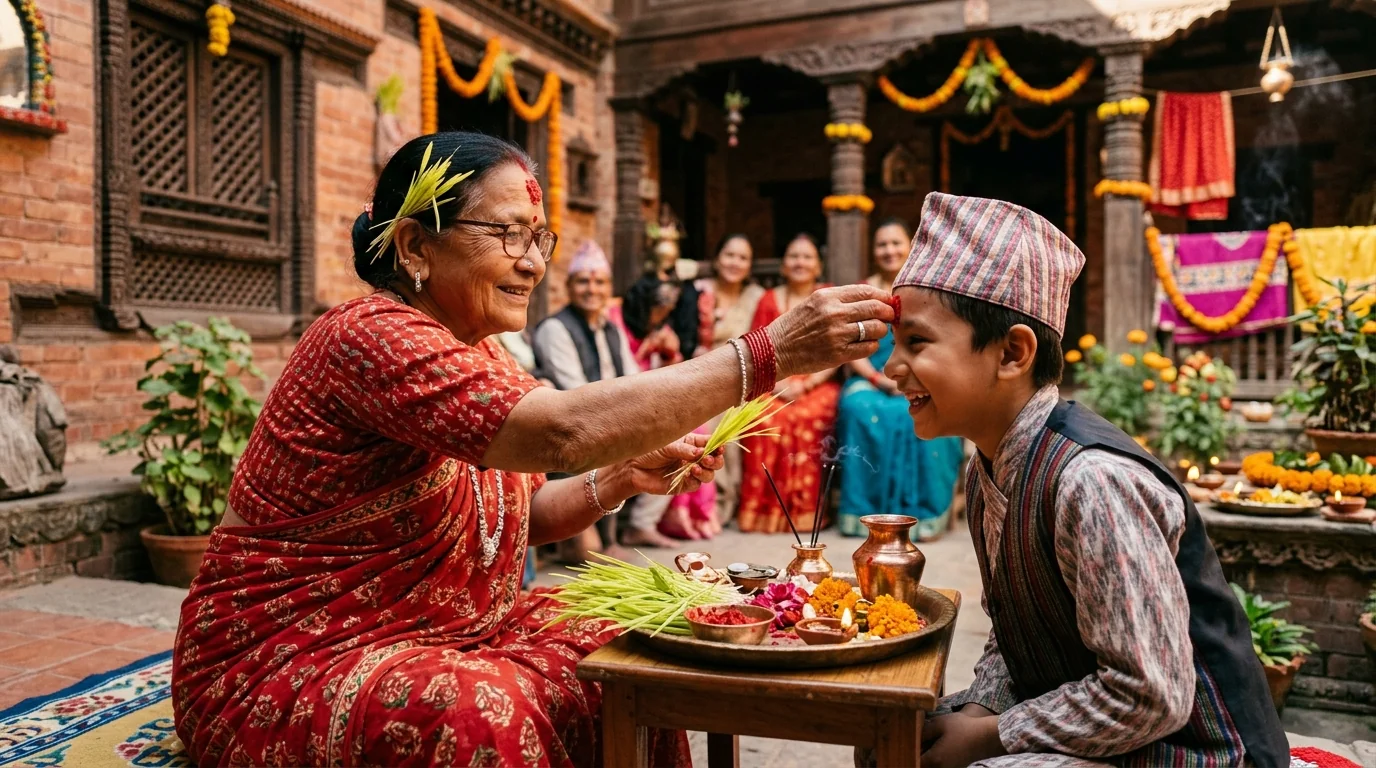
Jamara is one of the most recognizable symbols of Dashain. The yellow or green shoots are grown from seeds planted on Ghatasthapana. By the time of Vijaya Dashami, the jamara has grown and is used during the tika and blessing ceremony.
Elders place jamara on the heads or behind the ears of younger family members along with tika. The ritual is connected with blessings, prosperity, growth, and good fortune.
Jamara also represents an agricultural connection that remains important in Nepal's culture. Nepal has a long agricultural history, and many festivals reflect the intimate relationship between people, land, crops, and seasonal change.
Fulpati - A Major Dashain Celebration
Fulpati is observed on the seventh day of Dashain. Traditionally, Fulpati refers to sacred flowers, plants, and foliage that are brought together for worship. The day has special cultural and ceremonial importance.
In Kathmandu, Fulpati has historically been associated with a grand ceremonial procession carrying the royal bouquet from Gorkha Durbar to the historic Hanuman Dhoka Palace, accompanied by traditional military bands and state salutes at Tudikhel.
For ordinary families, Fulpati is also a time when Dashain celebrations become intensely active. Many people have already returned home by this stage, markets bustle with last-minute shoppers, and kitchens begin preparing for the feasts ahead.
Maha Ashtami - A Day of Intense Worship
Maha Ashtami is another major day of Dashain. On this day, Goddess Durga is worshipped in her fiercest forms, particularly as Mahakali or Kalratri. Many families visit shakti peeths, temples, or perform intense religious rituals at home.
Practices vary widely across Nepal and depend on family beliefs, local customs, and ethnic traditions. While some communities observe symbolic or animal offerings, many families observe purely vegetarian rituals, coconut breaks, or meditative prayers. There is no single experience that represents every household in Nepal.
Maha Navami and its Traditions
Maha Navami is the ninth day of the main Dashain observance, representing the final day of Navaratri before Vijaya Dashami.
Historically, Maha Navami has also been associated with Vishwakarma veneration: artisan tools, vehicles, machinery, and agricultural instruments are washed, decorated with marigold garlands, and blessed. The day represents preparation, devotion, and profound respect for the tools and crafts that sustain human livelihoods.
Vijaya Dashami - The Day of Tika and Blessings
Vijaya Dashami is the supreme, most joyful day of Dashain. This is when elders place tika and jamara on younger family members and offer blessings (Ashirwad) for health, happiness, wisdom, courage, and longevity.
The red tika is made from an auspicious mixture of unbroken rice grains (Akshata), yogurt, and vermilion powder. In certain communities, such as parts of the Newar, Magar, or Gurung traditions, white rice tika or specific regional variations are customary.
After receiving tika and blessings, younger family members receive dakshina, typically given as auspicious currency notes or gifts. The tika ceremony continues for five days until Kojagrat Purnima, allowing families to visit extended relatives across different towns and villages.
Why Do Elders Give Tika During Dashain?
The tika ceremony is a way for elders to bless younger generations. The ritual expresses:
- Respect for Elders: Acknowledging the guidance, sacrifices, and wisdom of parents and grandparents.
- Family Connection: Reaffirming lifelong bonds across branches of the family tree.
- Good Wishes for the Future: Chanting classical Sanskrit or vernacular verses invoking strength, prosperity, and peace.
- Continuity Between Generations: Passing down sacred memories and cultural memory.
Dakshina and the Excitement for Children
Dakshina is another cherished Dashain tradition. Children receive crisp paper notes from uncles, aunts, and grandparents. Paired with brand-new festive clothes (Naya Luga), freedom from schoolwork, and flying colorful kites, Dashain creates sensory memories that Nepalis cherish for the rest of their lives.
Family Reunion and Travel During Dashain
One of the most profound aspects of Dashain is family reunion. Many Nepalis live away from their ancestral homes for work, education, or employment abroad. Dashain provides an irresistible pull to return home.
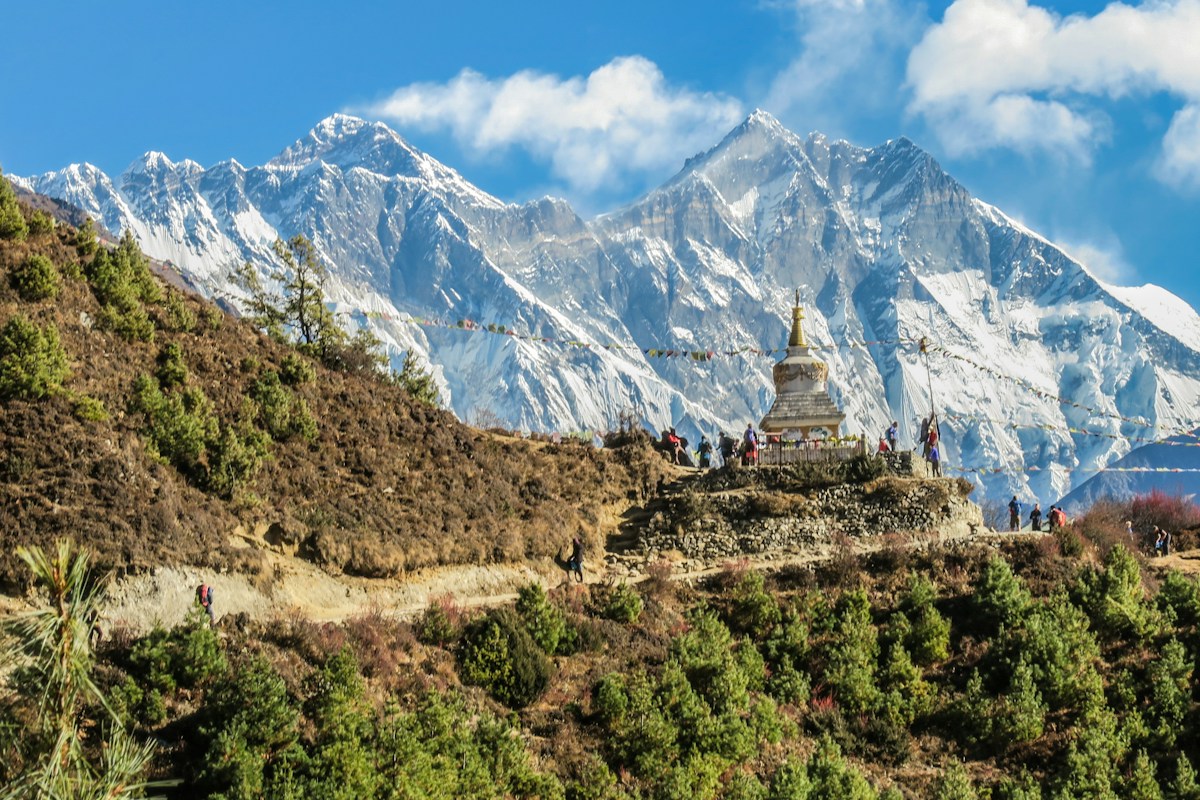
Highways, bus stations, and airport terminals overflow as hundreds of thousands travel from the capital to mountain villages. Returning to a village, meeting aging parents, sitting around a wood-fired hearth, and sharing meals are just as central to Dashain as any ritual.
Food and Traditional Feasts
Culinary traditions are central to the festival. Families prepare rich feasts that contrast with ordinary daily meals:
- Sel Roti: Ring-shaped, crispy, sweet fried rice bread freshly prepared at dawn.
- Khasi Ko Masu: Aromatic goat curry spiced with ginger, garlic, cloves, and bay leaves.
- Khaste & Pulao: Fragrant spiced rice garnished with nuts, raisins, and ghee.
- Dahi & Achar: Fresh curd, tangy radish radish pickle (Mula Ko Achar), and fermented greens (Gundruk).
- Sweetmeats & Fruits: Laddus, rasbari, and seasonal autumn fruits.
Ping and Traditional Dashain Swings
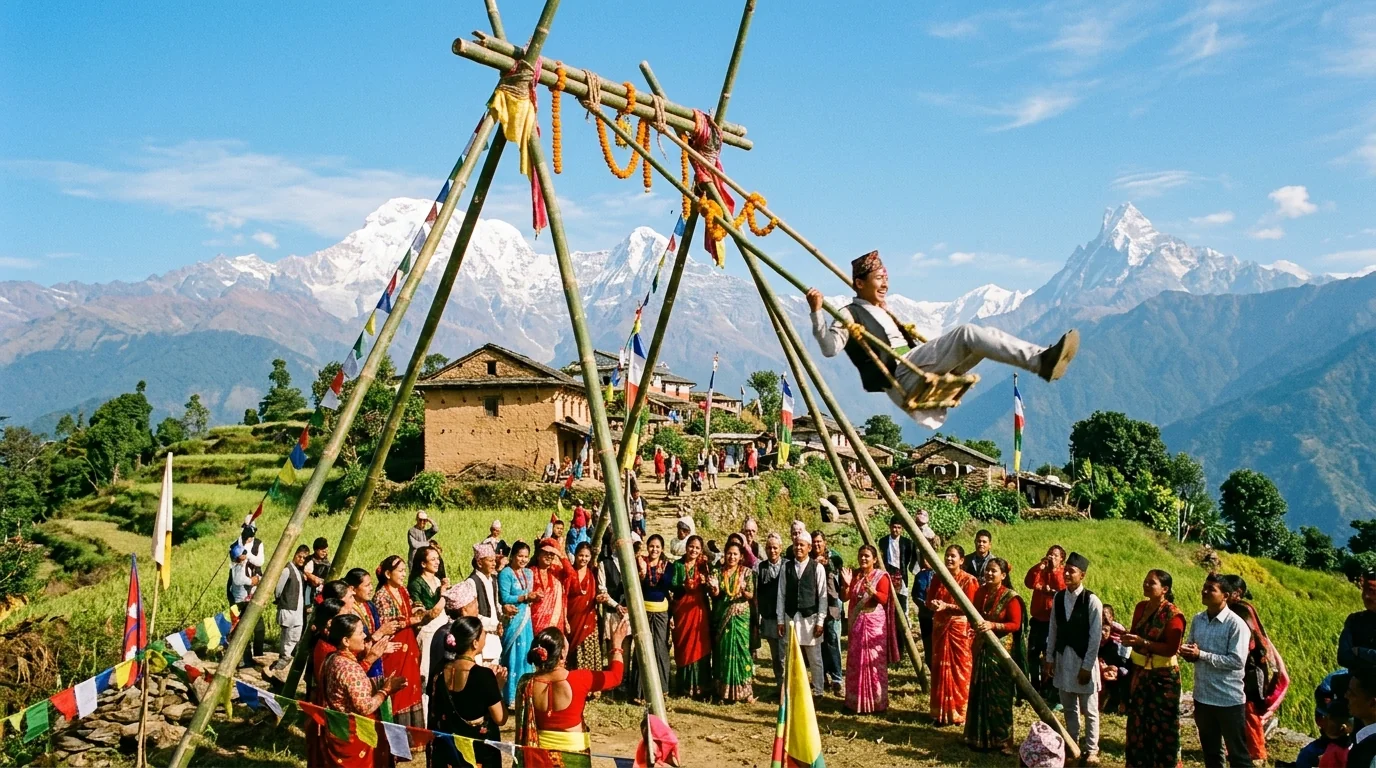
Towering bamboo swings, known as Ping (especially Linge Ping constructed from four massive bamboo poles and natural grass rope), are erected on village hilltops and open public squares.
Folklore holds that a person must lift their feet off the ground on a swing at least once during Dashain to cleanse past misfortunes. Swings bring together neighbors, children, and elders in shared laughter.
Dashain and Nepal's Changing Society
Dashain continues to evolve alongside contemporary life. Urbanization, migration, international employment, and digital connectivity have transformed how celebrations take place. Families now coordinate via group video calls to connect with loved ones in the UK, Australia, the US, or the Gulf.
Yet, despite digital payments, online shopping, and changing routines, the core essence remains unshaken: returning home, honoring elders, embracing family, and celebrating life with gratitude.
Frequently Asked Questions About Dashain
What is Dashain?
Dashain is Nepal's grandest national festival. It honors Goddess Durga's victory over Mahishasura, symbolizing the triumph of good over evil, family homecoming, and intergenerational blessings.
How many days does Dashain last?
Dashain lasts for 15 days, commencing on Ghatasthapana and concluding on Kojagrat Purnima (the full moon day).
Why do people put tika and jamara?
Elders place red vermilion rice tika and freshly sprouted golden barley jamara on younger family members as a sacred blessing for health, prosperity, courage, and longevity.
What happens on Fulpati and Vijaya Dashami?
Fulpati (7th day) marks the ceremonial arrival of sacred flowers and foliage from Gorkha to Kathmandu. Vijaya Dashami (10th day) is the main tika day of family blessings, feasts, and dakshina.
Conclusion
Dashain is one of the most important cultural celebrations in Nepal. Its religious roots tell timeless stories of victory, courage, and the triumph of good over evil, while its everyday traditions focus on family, respect, blessings, and reunion.
From Ghatasthapana and jamara to Fulpati, Vijaya Dashami, tika, dakshina, and family visits, every part of Dashain contributes to a larger cultural experience. The way people celebrate may change with time, but the desire to return home and reconnect with loved ones remains at the center of the festival.
Whether celebrated in a mountain village, a bustling city, or thousands of miles away abroad, Dashain continues to connect generations through traditions, memories, and shared family ties.